Monday, 5 June 2023

Week 6 Term 2 2023

 Homework:


  • Ex 4A, p.100-102, C.O.M.
  • Ex 4B, p.108-112, Momentum & C.O.M. in 1D
  • Ex 4C, p.116-122, Momentum & C.O.M. in 2D
  • Act 7A, p.87-88 Motion, Force and Energy
  • Act 7B, p.91-92 Impulse
  • Act 7C, p.95-96 Conservation of Momentum
  • Act 7D, p.100-101 C.O.M.
  • Act 8A, p.120-121 Horizontal Circles and Banked Corners
  • Act 8B, p.124-125 Vertical Circles
  • Act 8C, p.129 Sattelites
  • Ex 4D, p.128-131, Banked Corners (Circular Motion)
  • Ex 4E, p.138-142, Vertical Circles
  • Ex 4F, p.145-147, Gravity
  • Ex 4G, p.153-156 Satallites
  • Act 9A, p. 128-129, Angular Motion
  • Act 9B, p. 133-135, Torque - Angular Force
  • Act 9C, p. 128-129, Angular Momentum
  • Ex 4H, p.160-162, Rotational Kinematics
  • Ex 4I, P.167-171, Rotational Force & Momentum
  • Ex 4J, p.175-177, Rotational Kinetic Energy
Radians

Radian Measure is used so that we can easily calculate an arc length, d (m), given an angle, š›‰ (Rad) and the radius, r (m).

d = rš›‰

This in turn allows us to relate velocity, v (ms-1) to angular velocity ⍵ (rads-1), in the same way.

v = r⍵, 

also ⍵ = 2š…f

 This also allows us to relate acceleration, a (ms-2), to angular acceleration, Ī± (rads-2), in the same way.

a = rα

The rotational kinematics work just like the translational kinematic equations when there is a constant acceleration.


Rotational Kinematics Review

Rotational Kinematics


Rotational Kinematics Physics: Problems, Basic Introduction, Equations & Formulas


Rotational Motion Physics, Basic Rotational Motion Physics: Introduction, 

Angular Velocity & Tangential Acceleration


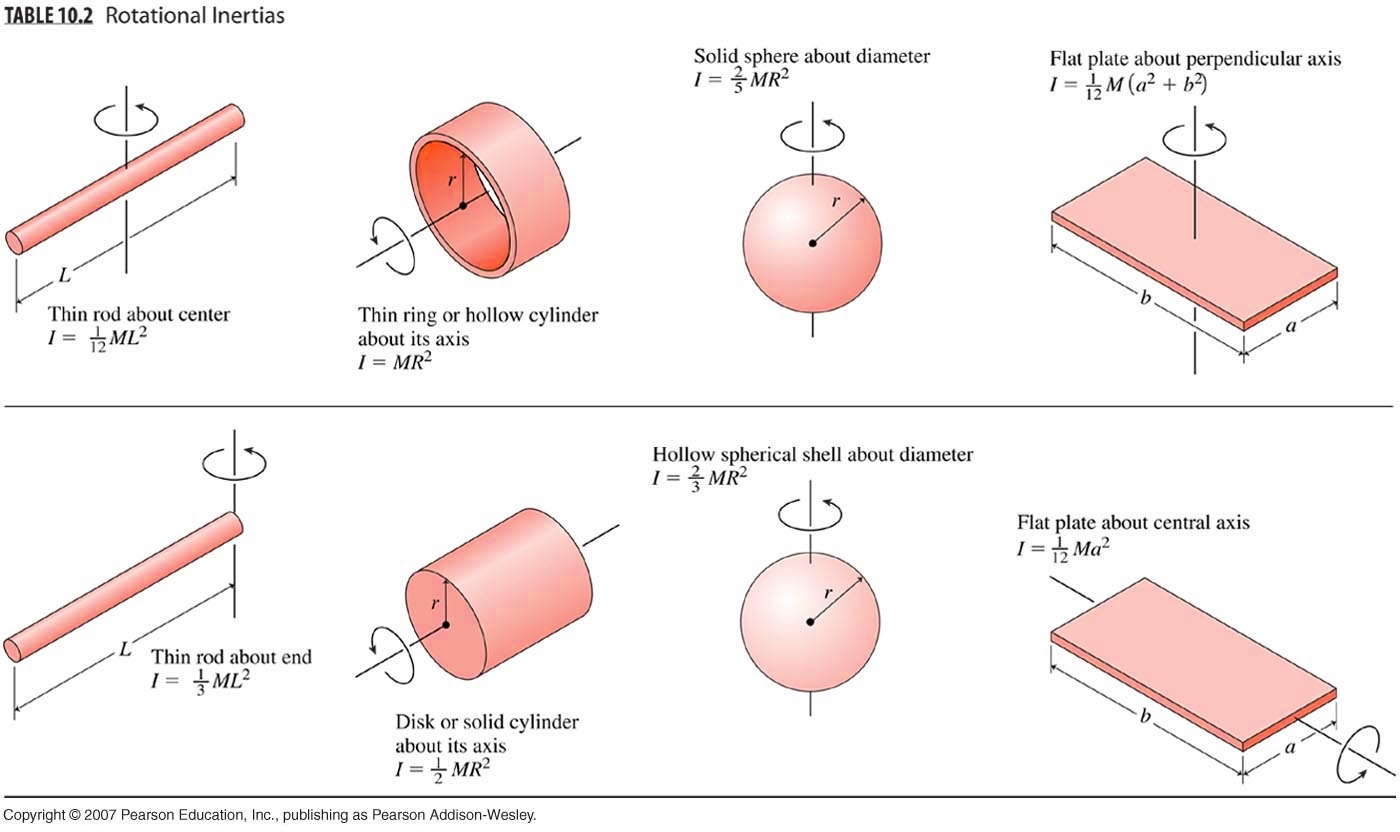
Rotational Inertia


Rotational Inertia

Torque


Angular Momentum

Angular Momentum - Sixty Symbols

Gyroscopic Precession


Slow Motion Flipping Cat Physics


Counter Steering Physics


The Bizarre Behavior of Rotating Bodies, Explained


Ellipzoids and the Bizarre Behavior of Rotating Bodies


Sunday, 14 May 2023

Week 3 Term 2 2023

 Homework:


  • Ex 4A, p.100-102, C.O.M.
  • Ex 4B, p.108-112, Momentum & C.O.M. in 1D
  • Ex 4C, p.116-122, Momentum & C.O.M. in 2D
  • Act 7A, p.87-88 Motion, Force and Energy
  • Act 7B, p.91-92 Impulse
  • Act 7C, p.95-96 Conservation of Momentum
  • Act 7D, p.100-101 C.O.M.
  • Act 8A, p.120-121 Horizontal Circles and Banked Corners
  • Act 8B, p.124-125 Vertical Circles
  • Act 8C, p.129 Sattelites
  • Ex 4D, p.128-131, Banked Corners (Circular Motion)
  • Ex 4E, p.138-142, Vertical Circles
  • Ex 4F, p.145-147, Gravity
  • Ex 4G, p.153-156 Satallites

Banked Corners

Circular Motion - Banked Curves


Car on a Banked Corner

Free body diagram sine and cosine components


Vertical Circular Motion

Vertical Circular Motion

Walter Lewin Vertical Circular Motion


Gravitation: The Four Fundamental Forces of Physics


Introduction to Newton's law of gravitation | Physics | Khan Academy


Speed of a Satellite in Circular Orbit, Orbital Velocity, Period, Centripetal Force


Gravity Visualised

How Do Satellites Get & Stay in Orbit?


Kepler’s First Law of Motion - Elliptical Orbits 

Kepler’s Second Law of Motion - Equal Area Equal Time Law


Kepler's Third Law of Motion - T2 ∝ R3

Monday, 1 May 2023

Week 2 Term 2 2023

 Homework:


  • Ex 4A, p.100-102, C.O.M.
  • Ex 4B, p.108-112, Momentum & C.O.M. in 1D
  • Ex 4C, p.116-122, Momentum & C.O.M. in 2D
  • Act 7A, p.87-88 Motion, Force and Energy
  • Act 7B, p.91-92 Impulse
  • Act 7C, p.95-96 Conservation of Momentum
  • Act 7D, p.100-101 C.O.M.


Centre of Mass (C.O.M.)


Center of Mass - Science Theater 29


Center of Mass


Centre of Mass + Momentum


Collision and C.O.M.


Momentum Collision in 2 Dimensions


Momentum in 2D Explained Graphically

How Hard Can You Hit a Golf Ball?

Tuesday, 21 March 2023

Week 8 Term 1 2023

Lesics Electronics Enginering Videos


Transistors, How do they work?


MOSFET


Inverter DC --> AC

Thyristor


Tuesday, 21 February 2023

Week 4 Term 1 2023

   Homework:

  • Act 11A, p.176 Waves & Photons
  • Act 11B, p.179 Photoelectric Effect
  • Ex 5B, p.205-208 Photoelectric Effect
  • Ex 5C, p.212-215 Photoelectric Effect
  • Act 11C, p.183 Atomic Line Spectra
  • Act 11D, p.188-189 Bohr Model of Hydrogen Atom
  • Ex 5D, p.221-222 Atomic Models
  • Ex 5E, p.228-230 Atomic Line Spectra
  • Act 12A p.207-208 E=mc^2
  • Act 12B p.213-214 Nuclear Reactions
  • Ex 5F p.234-236 E=mc^2
  • Ex 5G p.242-246 Nuclear Reactions

When is now Relativity and Neurology


Nuclear Fission


Nuclear Fission; splitting the atom for beginners


Nuclear Physics: Crash Course Physics #45


Nuclear Chemistry: Crash Course Chemistry #38


Nuclear Chemistry Part 2: Fusion and Fission - Crash Course Chemistry #39


Nuclear Fission

  • The breaking up of a larger nucleus into smaller nuclei
  • The decrease in mass per nucleon, matches the increase in binding energu per nucleon
  • This binding energy per nucleon is a negative energy and represents energy that is lost (radiated away) during the reaction. 
  • Binding energy per nucleon also represents the energy that would need to be added to liberate a nucleon from the nucleus
Nuclear Fission

Fission & Fusion

Nuclear Fusion
  • The joining of smaller nuclei into a larger nucleus
  • The decrease in mass per nucleon, matches the increase in binding energu per nucleon
  • This binding energy per nucleon is a negative energy and represents energy that is lost (radiated away) during the reaction. 
  • Binding energy per nucleon also represents the energy that would need to be added to liberate a nucleon from the nucleus

Nuclear Fusion

Fusion Energy

Binding Energy per Nucleon

Nuclear Reaction E = mc2


Binding Energy per Nucleon

Binding Energy per Nucleon is a negative energy or a debt of energy. This is the amount of energy it would take to liberate a nucleon from the nucleus. This energy was originally radiated off when the nucleus formed.

The energy radiated off, the Binding energy, is lost energy and comes from mass that is lost by the nucleons. Mass per Nucleon shows what is left over once a bound nucleon has radiated away some of its mass.


Mass per Nucleon


Fission:The breaking up of a larger nucleus into smaller daughter nuclei. Anything above Iron will radiate off energy.

Fusion:
The joining of smaller nuclei into a larger nucleus. Anything below Iron will radiate off energy.


Fission & Fusion

Fission

Tuesday, 14 February 2023

Term 1 Week 3 2023

  Homework:


  • Act 11A, p.176 Waves & Photons (last week)
  • Act 11B, p.179 Photoelectric Effect (last week)
  • Ex 5B, p.205-208 Photoelectric Effect (last week)
  • Ex 5C, p.212-215 Photoelectric Effect
  • Act 11C, p.183 Atomic Line Spectra
  • Act 11D, p.188-189 Bohr Model of Hydrogen Atom
  • Ex 5D, p.221-222 Atomic Models
  • Ex 5E, p.228-230 Atomic Line Spectra

How Quantum Mechanics Saved Physics From Ovens


Planck's Constant - Sixty Symbols


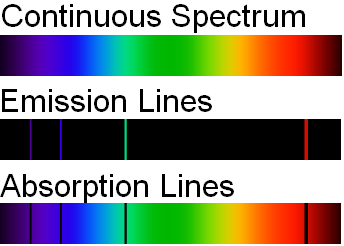
Atomic Line Spectra

Hydrogen Emission and Absorption Spectra for the visible Balmer Series


Atomic Line Spectra for Hydrogen

Emission & Absorption Lines for Hydrogen


Emission Lines for Hydrogen

Bohr Model of the Hydrogen Atom

 Bohr Model of the atom and Atomic Emission Spectra


Line Spectra & the Bohr Model

Emission and Absorption Line Spectra


Bohr Model of the Hydrogen Atom

Energy Levels


Bohr Model of the Hydrogen Atom


Atomic Spectroscopy Explained


Fine Structure Constant 1/137