Showing posts with label Electron Volts. Show all posts

Wednesday, 7 February 2024

Week 2 Term 1 2024


Homework:

  • Activity 11A, p.188-189 Waves & Photons
  • Activity 11B, p.192 Photoelectric Effect
  • Exercise 5B, p.205-208 Photoelectric Effect
  • Ex 5C, p.212-215 Photoelectric Effect
  • Act 11C, p.183 Atomic Line Spectra
  • Act 11D, p.188-189 Bohr Model of Hydrogen Atom
  • Ex 5D, p.221-222 Atomic Models
  • Ex 5E, p.228-230 Atomic Line Spectra

Photoelectric Effect

Photoelectric Effect A-Level Physics


H
ertz and Lenards Observation of Photoelectric Effect


Photoelectric Effect

The concept of the Photoelectric Effect was introduced and how light modeled as a particle can explain this, while light modeled as a wave cannot.

The above video explains the Photoelectric Effect using a PhET application which I encourage you to use and experiment with.
This can be found at:

Planck's Constant h = 6.63 x 10-34 Js

Energy of a Photon E = hf

Threshold Frequency fo , the frequency of incident photons that have an energy equal to the work function of the metal

Work Function φ = energy required to free an electron from a specific metal (J)

Maximum Kinetic EnergyEk,  of a freed electron by an incident photon:
Ek = hf - φ


Electron Volts to Joules Conversion


How Quantum Mechanics Saved Physics From Ovens


Planck's Constant - Sixty Symbols


How Quantum Mechanics Saved Physics From Ovens


Planck's Constant - Sixty Symbols


Atomic Line Spectra

Hydrogen Emission and Absorption Spectra for the visible Balmer Series
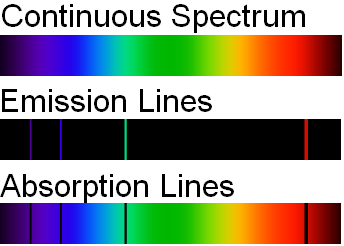

Atomic Line Spectra for Hydrogen

Emission & Absorption Lines for Hydrogen


Emission Lines for Hydrogen

Bohr Model of the Hydrogen Atom

 Bohr Model of the atom and Atomic Emission Spectra


Line Spectra & the Bohr Model

Emission and Absorption Line Spectra


Energy Levels


Bohr Model of the Hydrogen Atom


Atomic Spectroscopy Explained


Fine Structure Constant 1/137

Tuesday, 8 February 2022

Term 1 Week 2 2022

 Homework:


  • Activity 11A, p.176 Waves & Photons
  • Activity 11B, p.179 Photoelectric Effect
  • Exercise 5B, p.205-208 Photoelectric Effect

Photoelectric Effect

Photoelectric Effect A-Level Physics


H
ertz and Lenards Observation of Photoelectric Effect

Sunday, 4 March 2018

Term 1 Week 5 2018

Homework:

  • Ex 11C Spectral Lines - ESA Text (last week)
  • Ex 11D Atomic Energy Levels - ESA Text (last week)
  • Ex 12 A E = mc2 - ESA Text
  • Ex 12 B Nuclear Reactions ESA Text

Electron Volts to Joules Conversion


Mass? Energy? What's The Difference?!


Mass Defecit & Binding Energy


Where does the Sun get its Energy?

Binding Energy per Nucleon

Mass per Nucleon


Mass deficit and binding energy in FUSION


Mass deficit and binding energy in FISSION


Einstein's Proof of E=mc²


Why is Light the Fastest Thing?

Wednesday, 2 March 2016

Term 1 Week 5

Homework: 

Ex 10, p.189-198 Modern Physics - this will be assessed on Friday 4th March and covered the Modern Physics Topic Phy 3.5 AS 91525. This topic will be assessed in Week 8.

Electron Volts:

Some people have been getting confused by electron volts eV.
An electron volt is the amount of energy needed to move an electron through one volt of electrical potential.
Recall electrical potential energy:

Ep = qV

q: Charge in Coulombs (C)
V: Voltage in Volts (V)

The charge of one electron e = 1.60 x 10⁻¹⁹ C

So the energy reqired to move one electron through one volt is:

1.60 x 10-19 C x 1 V = 1.60 x 10⁻¹⁹ J
so                       1eV = 1.60 x 10⁻¹⁹ J

Using eV for energy is just a way of showing the small energies involved in one or few particle reactions. 
Always use energy in Joules when calculating. This is the S.I. unit for energy.

Converting: