Sunday, 10 May 2020

Term 2 Week 4 2020

Homework:

  • Ex 4D, p.128-131, Banked Corners (Circular Motion)
  • Ex 4E, p. 138-142, Vertical Circles
  • Ex 4F, p.145-147, Gravity
  • Ex 4G, p.153-156, Circular Motion & Gravity


Gravitation: The Four Fundamental Forces of Physics


Introduction to Newton's law of gravitation | Physics | Khan Academy


Speed of a Satellite in Circular Orbit, Orbital Velocity, Period, Centripetal Force


Gravity Visualised

How Do Satellites Get & Stay in Orbit?


Kepler’s First Law of Motion - Elliptical Orbits 

Kepler’s Second Law of Motion - Equal Area Equal Time Law


Kepler's Third Law of Motion - T2 ∝ R3

Sunday, 3 May 2020

Term 2 Week 3 2020

Homework
  • Ex 4D, p.128-131, Banked Corners (Circular Motion)
  • Ex 4E, p. 138-142, Vertical Circles


Vertical Circular Motion

Vertical Circular Motion

Walter Lewin Vertical Circular Motion


Banked Corners

Circular Motion - Banked Curves


Car on a Banked Corner

Free body diagram sine and cosine components


Tuesday, 14 April 2020

Term 2 Week 1 2020

Homework:

  • Ex 4A, p.100-102, C.O.M.
  • Ex 4B, p.108-112, Momentum & C.O.M. in 1D
  • Ex 4C, p.116-122, Momentum & C.O.M. in 2D
  • Act 7A, p.87-88 Motion, Force and Energy
  • Act 7B, p.91-92 Impulse
  • Act 7C, p.95-96 Conservation of Momentum
  • Act 7D, p.100-101 C.O.M.


Centre of Mass (C.O.M.)


Center of Mass - Science Theater 29


Center of Mass


Centre of Mass + Momentum


Collision and C.O.M.


Momentum Collision in 2 Dimensions


Momentum in 2D Explained Graphically

How Hard Can You Hit a Golf Ball?

Sunday, 22 March 2020

Term 1 Week 1 2020

Phy 3.7 Nuclear Debate
Thursday 11th April

Renewable Energy and Electricity
World Nuclear Association 2019
  • There is widespread popular support for using renewable energy, particularly solar and wind energy, which provide electricity without giving rise to any carbon dioxide emissions.
  • Harnessing these for electricity depends on the cost and efficiency of the technology, which is constantly improving, thus reducing costs per peak kilowatt, and per kWh.
  • Utilising electricity from solar and wind in a grid becomes problematical at high levels for complex but now well-demonstrated reasons. Supply does not correspond with demand.
  • Back-up generating capacity is required due to the intermittent nature of solar and wind. System costs escalate with increasing proportion of variable renewables.
  • Policy settings to support renewables are generally required to confer priority in grid systems and also subsidise them, and some 50 countries have these provisions.
  • Utilising solar and wind-generated electricity in a stand-alone system requires corresponding battery or other storage capacity.
  • The possibility of large-scale use of hydrogen in the future as a transport fuel increases the potential for both renewables and base-load electricity supply.


Debate: Is Nuclear Power the Answer to Climate Change?

On May 3, 2016, renewable energy expert Professor Daniel Kammen of the University of California Berkeley debated nuclear power advocate Lauri Muranen, executive director of the World Energy Council, Finland, on the question: "Is nuclear power the answer to climate change?" The event, part of the Einaudi Center's annual Lund Critical Debate Series, was moderated by Cornell law and anthropology professor Annelise Riles.


Wave Power Station


Tidal Current Turbine


Worlds Largets Battery


Wells Turbine


Understanding the accident of Fukushima Daiichi


88,000 tons of radioactive waste – and nowhere to put it


The Eyes of Nye S01 E05 Nuclear Energy


Is Nuclear Power Good Or Bad?


How fear of nuclear power is hurting the environment


Thursday, 20 February 2020

Term 1 Week 4 2020

Homework:

  • Activity 11A, p.176 Waves & Photons (last week)
  • Activity 11B, p.179 Photoelectric Effect (last week)
  • Activity 11C, p.183 Atomic Line Spectra
  • Activity 11D, p.188-189 Bohr Model of Hydrogen Atom
  • Ex 5A, p.197-198 Quantum (Revision)
  • Ex 5B, p.205-108 Photo-electric effect (Revision)
  • Ex 5C, p.212-215 Ek = hf - Ï†
  • Ex 5D, p.221-222 Bohr Model of Hydrogen Atom
  • Activity 12B, p.199-200 Nuclear Reactions
  • Ex 5F, p.234-236 Mass-Energy
  • Ex 5G, p.242-246 E = mc^2

Nuclear Fission


Nuclear Fission; splitting the atom for beginners


Nuclear Physics: Crash Course Physics #45


Nuclear Chemistry: Crash Course Chemistry #38


Nuclear Chemistry Part 2: Fusion and Fission - Crash Course Chemistry #39


Nuclear Fission

  • The breaking up of a larger nucleus into smaller nuclei
  • The decrease in mass per nucleon, matches the increase in binding energu per nucleon
  • This binding energy per nucleon is a negative energy and represents energy that is lost (radiated away) during the reaction. 
  • Binding energy per nucleon also represents the energy that would need to be added to liberate a nucleon from the nucleus
Nuclear Fission

Fission & Fusion

Nuclear Fusion
  • The joining of smaller nuclei into a larger nucleus
  • The decrease in mass per nucleon, matches the increase in binding energu per nucleon
  • This binding energy per nucleon is a negative energy and represents energy that is lost (radiated away) during the reaction. 
  • Binding energy per nucleon also represents the energy that would need to be added to liberate a nucleon from the nucleus

Nuclear Fusion

Fusion Energy

Binding Energy per Nucleon

Nuclear Reaction E = mc2


Binding Energy per Nucleon

Binding Energy per Nucleon is a negative energy or a debt of energy. This is the amount of energy it would take to liberate a nucleon from the nucleus. This energy was originally radiated off when the nucleus formed.

The energy radiated off, the Binding energy, is lost energy and comes from mass that is lost by the nucleons. Mass per Nucleon shows what is left over once a bound nucleon has radiated away some of its mass.


Mass per Nucleon


Fission:The breaking up of a larger nucleus into smaller daughter nuclei. Anything above Iron will radiate off energy.

Fusion:
The joining of smaller nuclei into a larger nucleus. Anything below Iron will radiate off energy.


Fission & Fusion

Fission

Sunday, 9 February 2020

Term 1 Week 3 2020

Homework:

  • Activity 11A, p.176 Waves & Photons (last week)
  • Activity 11B, p.179 Photoelectric Effect (last week)
  • Activity 11C, p.183 Atomic Line Spectra
  • Activity 11D, p.188-189 Bohr Model of Hydrogen Atom
  • Ex 5A, p.197-198 Quantum (Revision)
  • Ex 5B, p.205-108 Photo-electric effect (Revision)
  • Ex 5C, p.212-215 Ek = hf - Ï†
  • Ex 5D, p.221-222 Bohr Model of Hydrogen Atom

How Quantum Mechanics Saved Physics From Ovens


Photoelectric Effect

Planck's Constant - Sixty Symbols


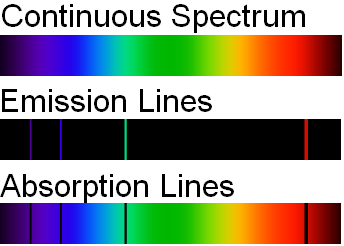
Atomic Line Spectra

Hydrogen Emission and Absorption Spectra for the visible Balmer Series


Atomic Line Spectra for Hydrogen

Emission & Absorption Lines for Hydrogen


Emission Lines for Hydrogen

Bohr Model of the Hydrogen Atom
Line Spectra & the Bohr Model

Emission and Absorption Line Spectra


Bohr Model of the Hydrogen Atom

Energy Levels


Bohr Model of the Hydrogen Atom